


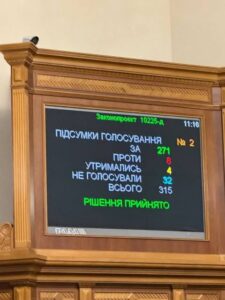
On 25 November 2026, the Verkhovna Rada passed bill No. 10225-d on the regulation of the virtual assets market in the second reading and as a whole. The law sets rules for crypto market participants, defines the powers of regulators, establishes how virtual asset transactions are taxed, and adds investor protection mechanisms. The main provisions take effect on 1 July 2027.
Why a new law was needed
The Law of Ukraine “On Virtual Assets,” adopted back in 2022, never really came into operation: its entry into force depended on amendments to the Tax Code that were not adopted. The new law closes that gap and provides a basis for companies offering virtual asset exchange, trading and custody services to operate legally.
Who will regulate the market
The law introduces a joint regulation model, with powers split between two bodies:
- The National Securities and Stock Market Commission (NSSMC) admits participants to the market, authorizes and licenses them, and supervises platforms and service providers;
- The National Bank of Ukraine (NBU) is responsible for electronic money tokens, currency regulation, and the effect of virtual asset transactions on monetary and financial stability.
Which services are covered
The law sets legal conditions for providers of services related to virtual asset circulation. These include:
- custody and administration of client assets;
- exchange of virtual assets;
- execution of client orders;
- portfolio management;
- operation of trading platforms.
To offer these services, companies will need to obtain authorization and meet requirements for how they organize their operations, the transparency of transactions, and risk management.
Protection of client property
Service providers must keep client assets separate from their own property, disclose information about their activities, and manage risks. This is meant to reduce the chance that client funds are used for the provider’s own purposes and to make crypto platforms more transparent. The specific mechanisms for meeting these requirements still have to be worked out by regulators in secondary legislation.
How virtual asset transactions will be taxed
Tax will apply to the financial result of a transaction, not to the full amount received.
Individuals
- The basic approach is to tax a positive financial result at the end of the reporting period.
- For assets acquired before the new rules take effect, a transitional preferential regime applies: personal income tax (PIT) of 5% until the end of 2028.
- After the transitional period ends, the general PIT rate of 18% applies.
- The military levy is also paid.
The preferential regime is aimed at people who invested in cryptocurrencies earlier, when there was no clear tax mechanism for declaring the results.
Legal entities
Special rules will apply to determining the taxable result of virtual asset transactions by legal entities. Certain transactions are exempt from VAT, and the use of the simplified taxation system is restricted for entities engaged in this activity.
Reporting by service providers
Service providers will have to submit information on transactions of clients who are Ukrainian residents. This is intended to make the market more transparent and support tax control.
Market abuse and the link to MiCA
The law provides for measures against market manipulation and other abuses, along with requirements for disclosure and risk management. Its drafters took into account the approaches of the European MiCA regulation (Markets in Crypto-Assets), which sets uniform rules for crypto-asset markets in the EU. This brings Ukrainian legislation closer to the European model and should make it easier for international companies to operate in Ukraine.
What comes next
Before 1 July 2027, regulators must develop and approve the acts needed to launch the new regime, in particular authorization procedures for market participants and requirements for their operations.
- Businesses should assess in advance whether their activities fall under the new requirements and prepare for authorization.
- Holders of virtual assets should pay attention to the upcoming tax rules: keep documentary proof of acquisition costs and take the transitional tax regime into account.
The law moves Ukraine’s virtual assets market from fragmented regulation to a coherent legal model. How well it works in practice will depend on the quality of the secondary legislation and on how state bodies implement the new requirements.