


With the rise of digital content, copyright and intellectual property doctrines are being interpreted in new ways and shaping modern judicial and legal practice. Authors of digital (and other) works, some based on their own experience, others following recommendations, often include intellectual property disclaimers and claims of undisputed authorship as a preventive measure against potential lawsuits and media scandals. Yet, such “amulets” do not guarantee protection.
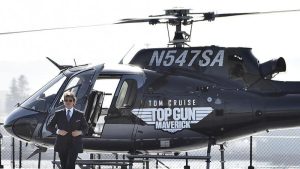
Recently, the U.S. Court of Appeals for the Ninth Circuit issued a decision in Yonay v. Paramount Pictures Corporation, concerning copyright claims over the film Top Gun: Maverick. The plaintiffs, Shosh Yonay and Yuval Yonay, heirs of Ehud Yonay, author of the article Top Guns (1983) which inspired the original 1986 film, argued that the 2022 film infringed their copyrights because Paramount had not renewed the license after the rights reverted in 2020. The appellate court affirmed the lower court’s decision dismissing the claim due to the absence of the circumstances cited by the plaintiffs. Let’s examine the arguments and key factors behind the ruling.
The lawsuit followed the 2020 legal termination of the prior copyright grant in favor of Paramount under 17 U.S.C. § 203, giving the heirs the right to reclaim copyright. Paramount released Top Gun: Maverick in 2022 without compensation or proper attribution to the original author.
Main arguments of the Yonay plaintiffs:
Copyright infringement: The plaintiffs claimed Maverick was “substantially similar” to the protected elements of Top Guns, arguing Paramount used copyrighted elements without permission.
Breach of contract: The 1983 agreement required Paramount to credit the author in any films “based on” or “adapted from” the article, but the 2022 film allegedly failed to comply.
At the trial court (Central District of California), the judge granted summary judgment in favor of Paramount, noting:
Maverick does not demonstrate “substantial similarity” in protected elements—the primary requirement for copyright infringement.
Plaintiffs’ expert opinion was excluded because it failed to separate unprotected elements (ideas, facts) from protected original expression.
The film was not created under the 1983 agreement; thus, the contract’s attribution requirement did not apply.
The Ninth Circuit fully affirmed the lower court’s decision. Key findings:
No “substantial similarity” of protected expressions. Maverick contains insufficient original expression from Top Guns to constitute infringement; similarities are limited to unprotected general themes like military aviation and elite training.
Expert testimony properly excluded, as it failed to distinguish protected from unprotected materials.
Contract claim rejected. The 1983 agreement required credit only if a film was “produced hereunder” or “substantially based upon or adapted from” the article. Maverick did not meet these criteria.
Background on the original 1983 agreement:
Ehud Yonay granted Paramount exclusive rights to adapt Top Guns for a feature film (Top Gun, 1986). The contract included a credit clause applicable if a film was created “hereunder” or “substantially based upon or adapted from” the article. Importantly, under U.S. copyright law, authors or heirs can terminate transferred rights (17 U.S.C. § 203).
Termination rights (17 U.S.C. § 203):
Allow authors or heirs to reclaim previously granted rights even if the contract was labeled “perpetual” or “irrevocable.”
For works created after Jan 1, 1978, the right arises 35 years after the agreement or 35 years after publication.
Termination does not happen automatically; it requires:
Written Notice of Termination
Submission 10 years to 2 years prior to the termination date
Registration with the U.S. Copyright Office
In this case, the procedure was followed, and Paramount did not challenge the termination’s formal validity.
Legal effect of termination:
Copyrighted property reverts to the heirs, who can license, prohibit, or claim compensation for new uses.
Derivative works exception: Works lawfully created before termination (e.g., Top Gun 1986) remain valid; new derivative works after termination require a new agreement.
Why Maverick was not considered infringement:
Courts applied the Ninth Circuit extrinsic and intrinsic tests to distinguish protected expression from unprotected ideas/themes.
Similarities were limited to general concepts (Navy pilots, elite training, competition) not protected by copyright.
Maverick did not copy structure, narrative, scenes, or text from the original article.
Why the credit argument failed:
The credit clause applied only if a film was created “hereunder” and substantially based on the article. Maverickwas independent and did not use licensed rights, so the contract did not apply.
Conclusion: Termination is a powerful tool but does not guarantee control over franchises or block new works if they are sufficiently original. Creators can lose rights to a source work but still produce new entries by avoiding copying protected expression. This case exemplifies the balance between authors’ rights to reclaim ownership and creative freedom in franchise development.